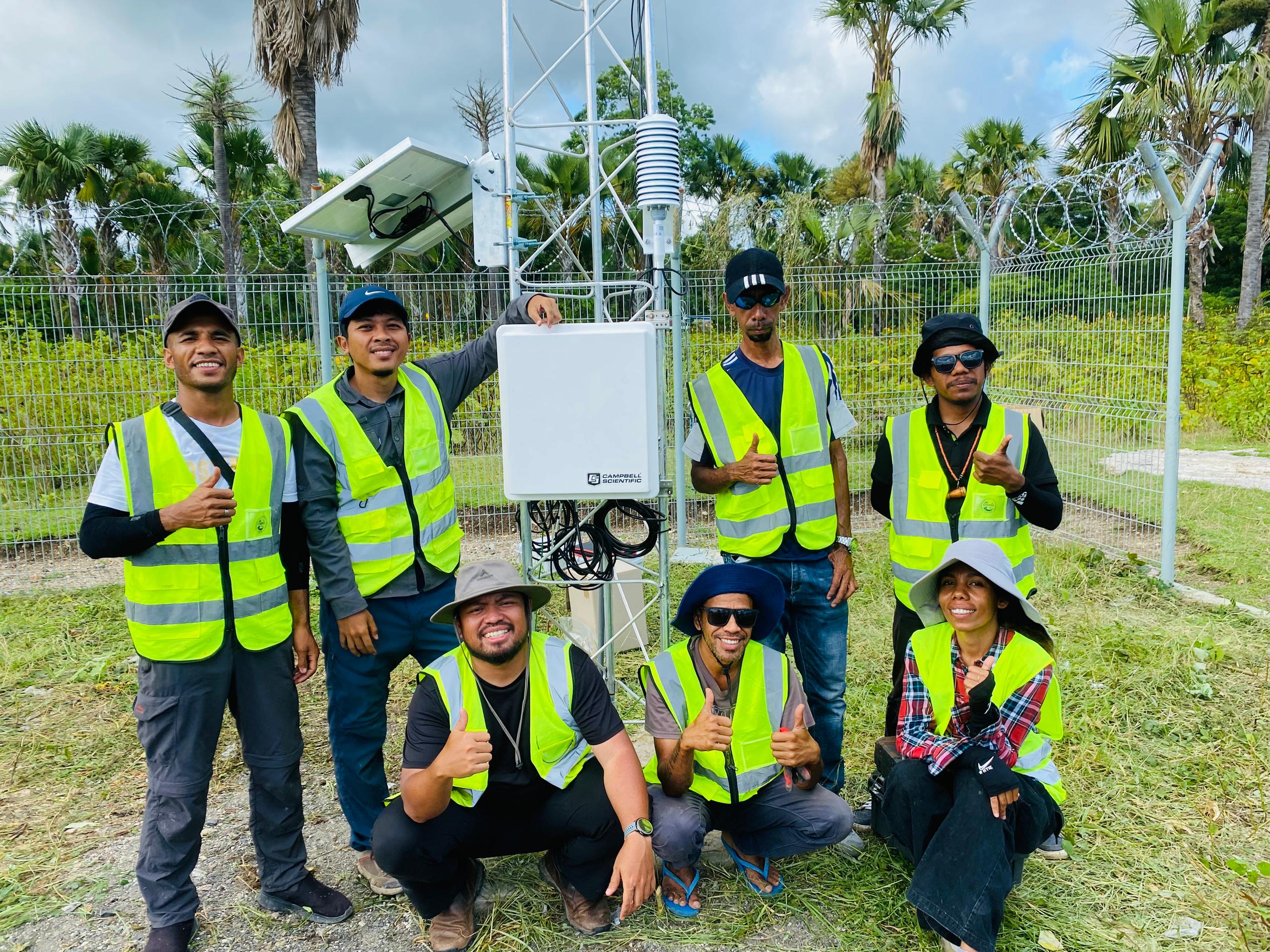
The National Directorate of Meteorology and Geophysics (DNMG) continues to strengthen its capacity to monitor meteorological conditions in Timor-Leste through the installation of Automated Weather Stations (AWS) in six municipalities: Ermera, Liquiçá, Manatuto, Baucau, Viqueque, and Lautém.
The installation of these automatic meteorological stations is an important part of efforts to improve the observation system and the collection of meteorological data at the municipal level. These AWS units can automatically and continuously collect information on atmospheric conditions, including temperature, rainfall, humidity, and other meteorological parameters.
The installation process and development of the AWS system have received support and collaboration from PT Manvis, Badan Meteorologi, Klimatologi, dan Geofisika (BMKG) Indonesia and Regional Integrated Multi-Hazard Early Warning System (RIMES). Cooperation among these institutions is highly important for strengthening technical capacity and the meteorological monitoring system in Timor-Leste.
Through AWS technology, DNMG will have greater opportunities to obtain meteorological data quickly, which can support weather analysis and forecasting. These data can also serve as an important basis for the preparation and dissemination of early warnings or alerts when there is potential for meteorological phenomena that could affect communities.
The installation of AWS in these municipalities is also considered an important step toward strengthening the coverage of the national meteorological observation network. With data collected directly from the municipalities, DNMG will be better able to understand weather patterns and variability in each municipality across the territory of Timor-Leste.
This initiative is expected to contribute to improving national meteorological services, including support for agriculture, transportation, aviation, disaster risk management, planning, and community safety.
DNMG, together with its partners, will continue to seek opportunities to develop meteorological infrastructure and capacity in the country, with the objective of ensuring that weather information and early warnings are accessible and useful to the government, communities, and users across various sectors.